SOLIDS:
Solid classes are based in sequential learning, most like a traditional class structure. Students will be encouraged to attend all classes; each class builds on the last. Solids aim to fully complete a project, either collectively or individually.
Jason Lord
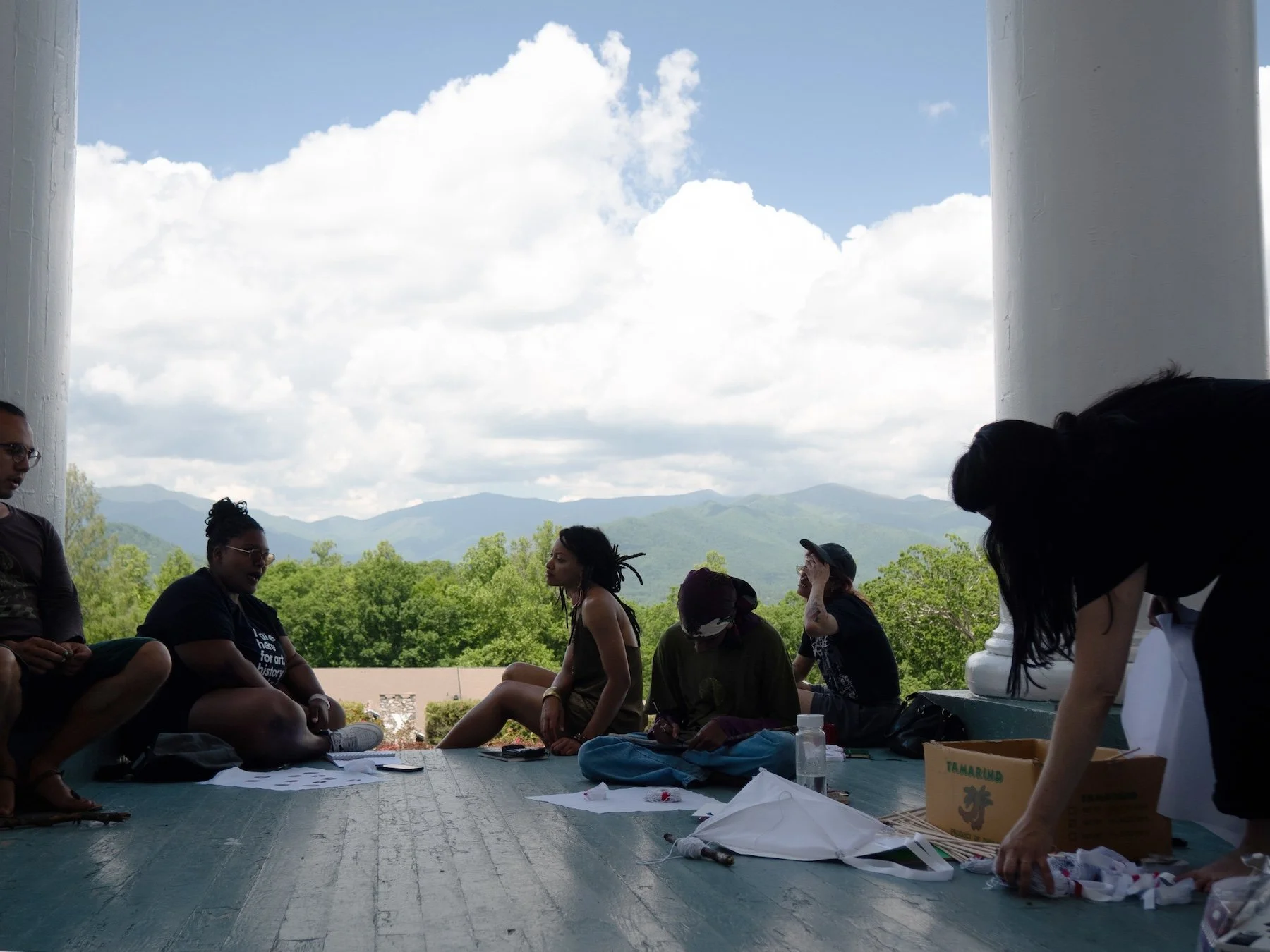
Huts, Nests, and Other Small Sanctuaries
This workshop invites participants to collaboratively design and build temporary structures using found and everyday materials. Working through improvisation, constraint, and material play, we will explore how simple acts of building can become ways of thinking about space, cooperation, and care.
Rather than aiming toward a finished object, the class treats construction as an ongoing process of experimentation. Participants will generate their own rules and working methods, learning how limits can produce unexpected forms of creativity and shared meaning. Structures will be built, altered, dismantled, and rebuilt, emphasizing impermanence, adaptability, and collective authorship.
Throughout the workshop, we will attend to how spaces shape relationships: how enclosures invite rest or conversation, how thresholds establish belonging or separation, and how fragile architectures can hold memory and imagination. The emphasis is on participation rather than expertise, curiosity rather than mastery, and shared experience rather than individual output.
Open to artists and non-artists alike. No prior building experience required—only a willingness to play seriously, work with others, and think through materials.
Emma Singer
Quilting Fast and Slow, Queer, Crip, and More
Very few of us walk steadily along a linear timeline in our lives, yet normative narratives shape behavior and expectations from the moment we’re born. A dependent child on track to become a fully independent adult; an able-bodied worker marrying, reproducing, and dying. In this class we will explore alternative temporalities, looking towards crip time, queer time, and grief time for their expansive and reimagined understandings. Together we’ll explore our own relationships to time and imagine how additional lenses offer us the chance for expansive, cripped, and queered futurity. We’ll explore quilting as a practice and medium that has always allowed for the marking and making of time, in individual lives and throughout generations. Together we’ll collaborate on a quilt: choosing patterns and fabrics and learning to piece by hand and machine. This class will be accessible for anyone interested, regardless of sewing experience.
Taylor Hanigosky
Tethering: A co-fabrication of textile and dance
Large-scale felt making is an embodied and tactile craft that asks for shared labor and collaborative ritual to fabricate functional textiles. In a time and place where many of us have experienced generational breaks in craft and ritual lineages, we reckon our need for belonging by excavating buried histories, looking to our own bodies for guidance and creating new material languages.
Tethering is an emergent group process of co-fabricating our entanglements to place and each other with our own hands in a physical, material process that relies on traditional craft. We study the intrinsic nature of wool to draw upon ancient webs of interconnection that are both latent and active in our animal bodies. We will explore tactile learning techniques and engage movement of the body as a methodology for our work. Over the duration of this course, we will shepherd raw material into finished textile from start to finish through improv movement prompts, dance scores, and collectively built rhythms.
This hands-on, active study of felt making will lean on metaphor, poetry, mythology, and dance to learn real traditional fiber craft skills, and also to write new possibilities for shared labor, community sovereignty, and mutual aid.
Miriam Saperstein
Access Artistry Portal
“This is an Access Portal. We are access artists”
—Hook&Loop, “Access Manifesto”
Learn practical skills and essential frameworks for transforming our communal spaces and projects into Access Portals, revolutionary collaborations in meeting each other’s needs, with Disability Justice at the center. Through case studies, discussion, and artistic exercises, we will explore questions such as: What is an access need? Access intimacy? What are strategies for navigating conflicting desires and needs within a group? How can we use what we have to meet each other’s needs in a time of artificial scarcity and State repression? We will build and enter the portal. Let’s play together as Access Artists.
LIQUIDS:
Liquid classes function as a series of workshops, so each session should be able to stand alone. Students are welcome to attend a different Liquid class each day, or to stick with the same one all week.
Maya Williams
Crafting Protopian Toolkits
Crafting Protopian Toolkits is an experimental space for reflecting on how to identify/create survival tools and assemble them into usable/shareable toolkits. In this class, we will imagine and discuss various possible futures (both good and bad) and examine what anchors connect our present to those possible futures. Once we have mapped these futures and their links to our present, we will begin exploring what tools can bring us closer to the futures we hope to see. We will look at tools and tool-making in a broad sense, connecting to both historical and speculative examples before assessing and building our own tool kits. At the end of this class we will create a shareable toolkit and pocket guide that participants can take back to their communities and continue to build upon.
keondra bills freemyn
Embodied/Annotated Archives
This class invites participants to reimagine archiving as a living, embodied practice. Moving beyond traditional documentation methods, we will explore how our bodies hold memory and how creative expression can unlock new ways of preserving and understanding personal and collective histories. Through storytelling, written reflections, and art-making, participants will develop experiential approaches to developing archival documentation in real time. Focusing on the sensory, emotional, and physical dimensions of memory making, each session honors memory as a dynamic, felt experience.
We will work with diverse materials and methods—writing exercises, movement practices, visual art, and collaborative sharing—to create archives that breathe and evolve. This workshop is designed for anyone interested in exploring the intersections of memory, creativity, and embodiment to explore personal histories, document community stories, and engage in alternative forms of knowledge preservation.
Sabel Santa
Grief Magick
In this course, students will be challenged to tap into grief and mourning with care and precision in order to transmute the energy into creation and resistance. I believe our capacity to grieve is directly related to our capacity to love and create. My goal is to assist students to access this capacity within themselves without dwelling on the pain. Through the use of somatic exercises, writing prompts and creative projects we will safely connect with the losses we have experienced and move that energy towards creativity.
Huiyin Zhou 徽音
Five Animal Frolics 五禽戏: Embodied Practices for Care & Liberation
This class dives into 五禽戏, a qigong practice in Chinese medicine, practiced daily by huiyin’s 外婆 (maternal grandmother). This choreographed set of practices imitates the movements of five animals: tiger, deer, bear, monkey, and bird. They each embody spirits of resilience, adventurousness, groundedness, agility, and freedom.
At a time when structural violence somatically overwhelms us with shock and grief, this class is an invitation to reground ourselves in our bodies as sites of wisdom and liberation. How can ancestral practices inform us of survival in the world today? How does embodied creativity alchemize (re)connection with the land, community, and spirits?
We will learn about the history of 五禽戏 and explore the different roles of these animal spirits in our work as cultural workers and community organizers. We will journal to curated prompts, practice 五禽戏 individually and in groups, and meditate together. Participants will also be invited to share embodiment practices from their own lineages.
No prior experience with dance, embodiment practice, or Chinese required. Let’s move our bodies and our grief towards centering, care, and conjuring a new world together.